
Roswell · Alpharetta · Sandy Springs · Johns Creek
Water Damage: Drywall Repair, Roswell, GA
A wall stain can mark a leak that has also wet the cavity behind the paint. Our local water damage professionals assess drywall and wall damage in Roswell, GA, identify affected materials and plan drying and repairs; call about the changes you notice.
- Calls answered 24/7
- Drywall & Wall Water Damage
- Roswell and nearby
Wall Repair Starts with the Wet Materials
- Damage assessment. Water damage wall repair starts with identifying affected surfaces and the moisture behind them. Your technician reviews the leak location and explains the boundaries of the proposed work.
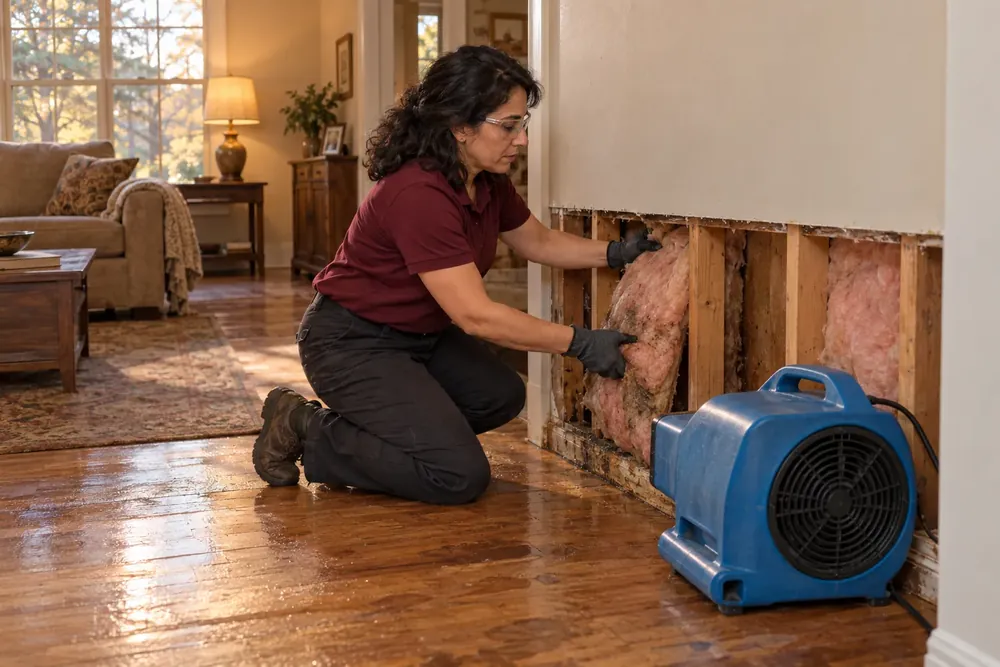
- Drywall evaluation. During water damage repair, drywall with swelling or failed seams is assessed for removal. Intact wallboard affected by clean water may be a candidate for drying in place.
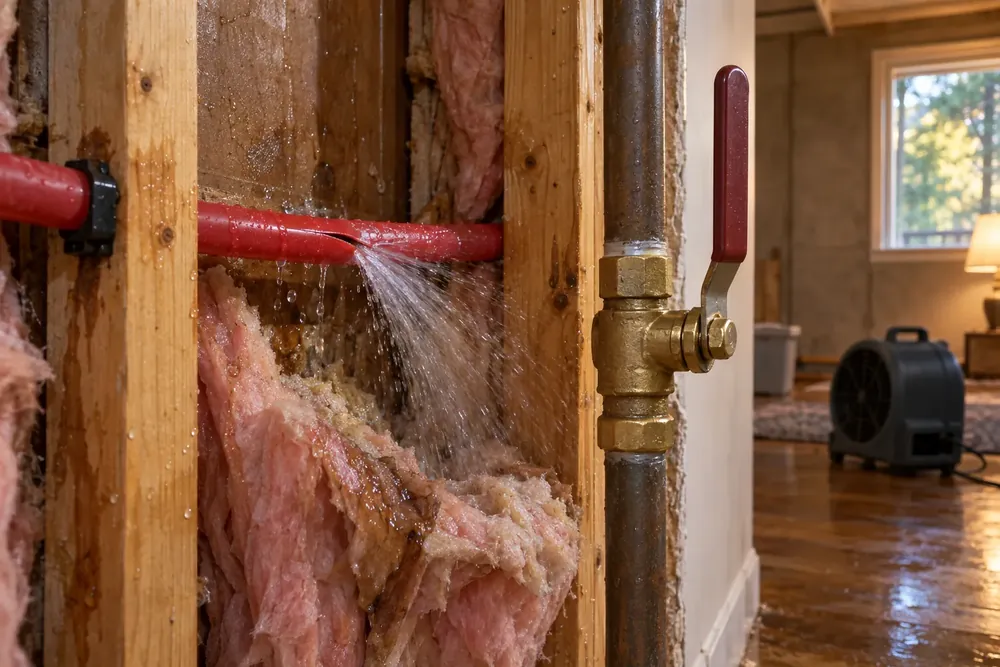
- Cavity access. Necessary openings give access to wet framing and insulation. The scope identifies the materials to remove and the areas to leave exposed during drying.
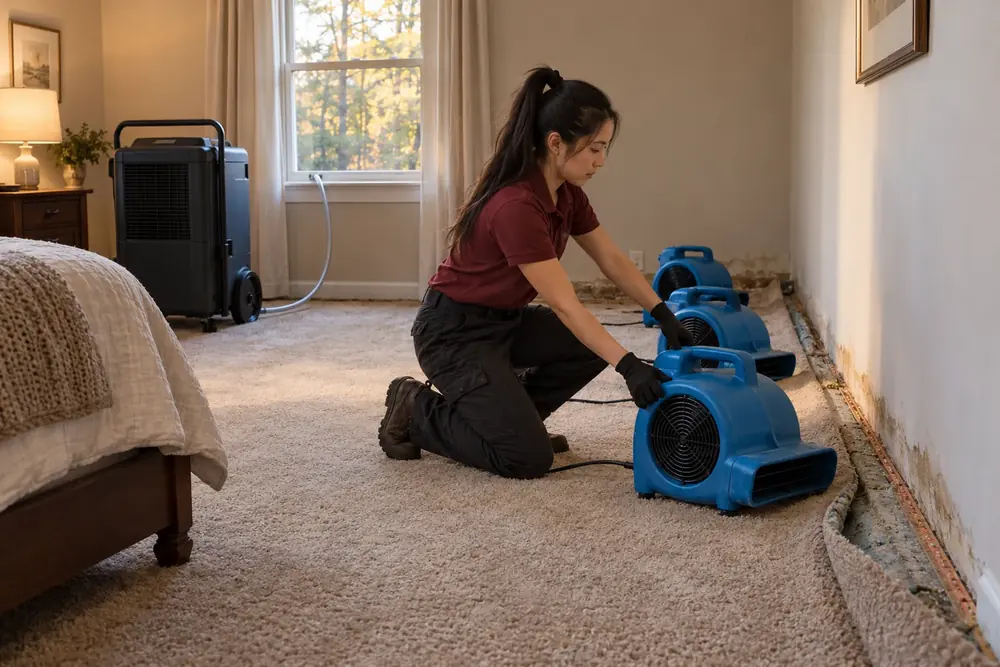
- Drying and monitoring. Air movement and dehumidification address retained moisture after cleanup. Readings help your technician evaluate progress within the affected wall assembly.
- Repair planning. Dry materials are the starting point for replacement board, joint finishing and paint. Your technician explains how those stages fit into the agreed repair scope.
Swelling and Peeling Finishes Point to Wall Moisture
- Swollen wallboard. Moisture can change drywall's shape and leave seams visibly damaged.
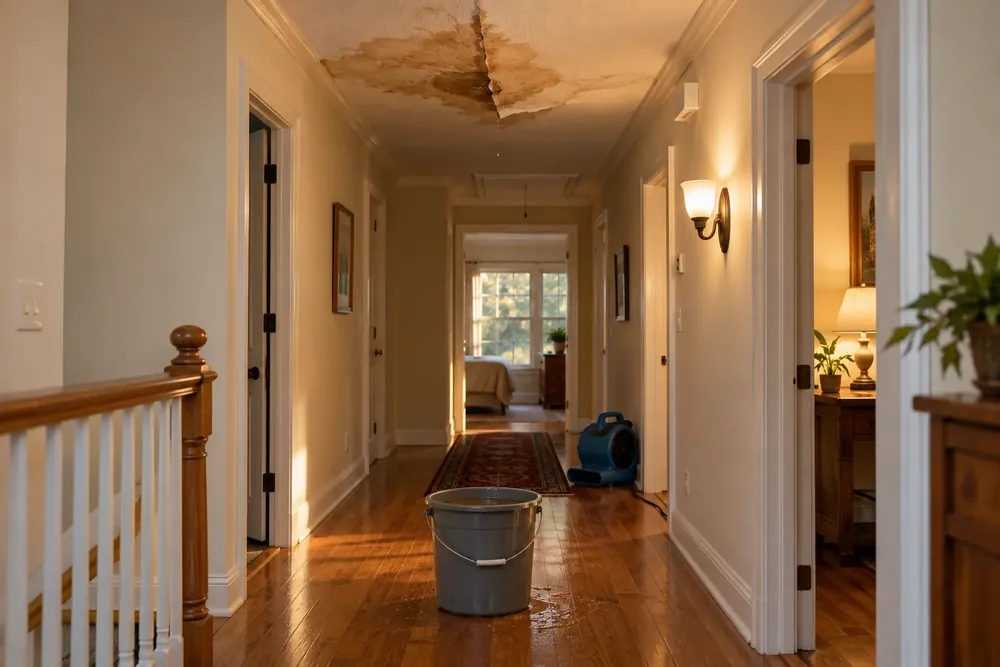
- Peeling finishes. Water damage on walls can show as lifting paint or loose wallpaper near a leak.
- Recurring marks. A stain that returns after painting calls for moisture assessment rather than another coat.
- A wet adjoining surface. Damp flooring beside the wall gives your technician another area to examine.
Call when a new mark or change appears; describe its location without cutting into the wall yourself.
Call, Assess, Dry and Restore the Wall
- Talk through the damage. Call and describe stains, peeling finishes or wet areas. Your technician uses those details to focus the assessment.
- Set the repair scope. The inspection identifies damp materials and necessary access. For water damage repair, wall openings and replacement boundaries are explained before the agreed work starts.
- Open and dry affected areas. Unsalvageable materials are removed, and equipment addresses moisture in the remaining assembly. Measurements track the drying progress.
- Close the dry wall assembly. After the moisture checks support rebuilding, the repair work proceeds through replacement drywall, joint finishing and the specified surface finish.
Wall Access and Replacement Shape the Repair Cost
A small stain may conceal a larger wet area, so water damage drywall repair cost depends on the inspected wall assembly. Access, affected insulation, damaged board, drying requirements and the finish all contribute to the work involved. Several rooms or difficult access can change the scope.
Before any wall work starts, one of our local water damage partners will review the repair boundaries with you and explain the price. Request a breakdown of drying, material removal and rebuilding. Read about those cost factors in the water damage cost guide.
Why Call About a Newly Damaged Wall
- A call at any hour. Calls are answered 24/7, so a spreading wall stain is reason to make contact now.
- Local wall assessment. A water damage professional serving Roswell discusses the visible damage and the checks needed behind the finish.
- An explained plan. Repair boundaries, drying measures and the price are reviewed before the agreed work begins.
- Useful documentation. Photos and moisture readings accompany a written scope, giving you a record of the wall condition and proposed work for insurance documentation.
Wall Damage Needs a Clear Written Record
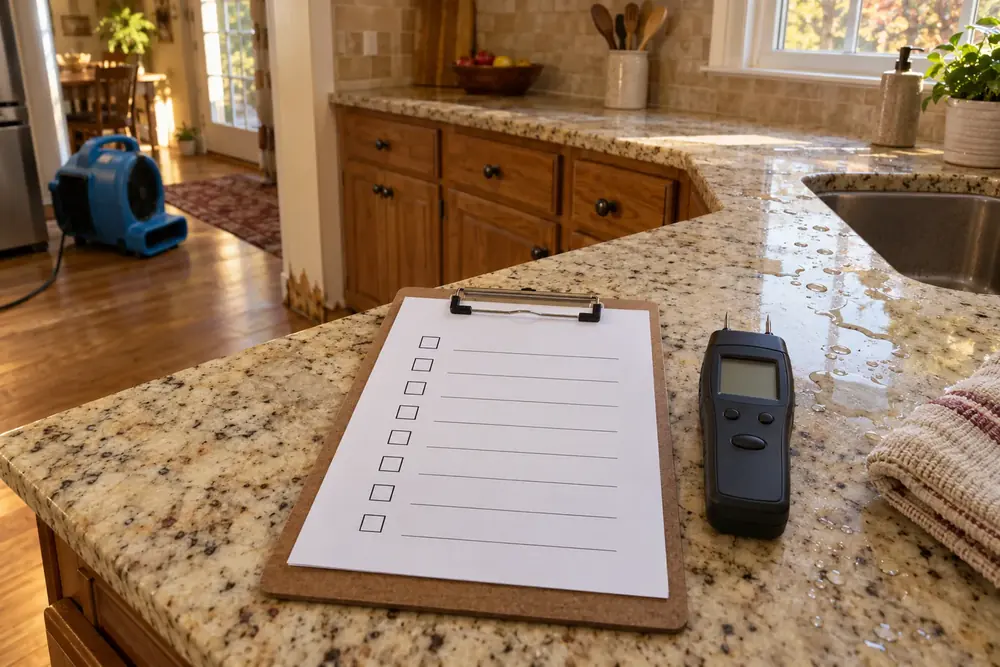
Wet wall materials may need removal, so photos and moisture readings help preserve a record of their condition. Your technician documents the affected surfaces, measured moisture and proposed repair boundaries in a written scope.
Keep copies of the photos, scope and work records with your own notes about when the leak appeared. The insurance documentation guide explains how those records describe the damage and the work. Documentation records the findings; it does not establish an insurance decision.
Avoid Disturbing Wet Walls and Nearby Wiring
Wet walls can place moisture near concealed wiring, so leave affected outlets and wall openings alone and call from a safe room.
- Avoid floodwater and keep children away from the wet area. CDC floodwater precautions describe electrical hazards and contaminants that may be present.
- Leave cutting and sanding to the assessment and repair process. Older materials can contain lead or asbestos, as described in EPA flood cleanup safety guidance.
- Do not cover wet wall cavities or paint over damp surfaces. Share any concerns about nearby wiring, loose finishes or existing wall openings during the call.
Related Water Damage Services
Areas We Serve Around Roswell
Roswell and Alpharetta homeowners can call about wet drywall, stained walls and damaged finishes. Describe the room and a local technician takes the assessment forward.
Drywall & Wall Water Damage FAQs
- Can water-damaged drywall dry without being replaced?
Intact drywall affected by clean water may dry in place when it has no obvious swelling and its seams remain sound. Swollen or damaged board needs a different approach. Your technician examines the condition and checks behind the surface before explaining which sections need removal and which can remain.
- Will painting over a water stain repair the wall?
Paint cannot dry a wet wall or address the moisture source behind it. The leak and affected materials need assessment before finishing work. Call about the mark, even if the surface feels dry, and your technician will explain whether the wall needs access, drying or replacement.
- Who should I call about a wet interior wall?
Call a water damage professional for assessment of the wall materials and a drying and repair plan. Describe any known leak during the conversation. Your technician explains the affected areas and whether separate source repairs are needed, along with the wall work included in the proposed scope.
- Does wet insulation need to come out?
Wet fiberglass or cellulose insulation may need removal and replacement, depending on its condition and your technician's assessment. Your technician identifies the insulation material, checks the surrounding framing and explains the removal boundaries. Drying and repair planning should address the cavity rather than only the visible face of the wall.
- When can replacement drywall be installed?
Replacement drywall should be installed after the moisture source is addressed and the remaining wall assembly is dry enough to close. Drying equipment alone does not establish readiness. Your technician uses material checks to explain when rebuilding can proceed and records the findings alongside the replacement and finishing scope.