
Roswell · Alpharetta · Sandy Springs · Johns Creek
Structural Drying in Roswell, GA
Walls and floors in a Roswell home can retain moisture after standing water is removed. Our local water damage professionals use structural drying and dehumidification to address damp materials and track their moisture levels; call and describe the leak, wet rooms or lingering dampness.
- Calls answered 24/7
- Structural Drying & Dehumidification
- Roswell and nearby
Structural Drying Services for Damp Walls and Floors
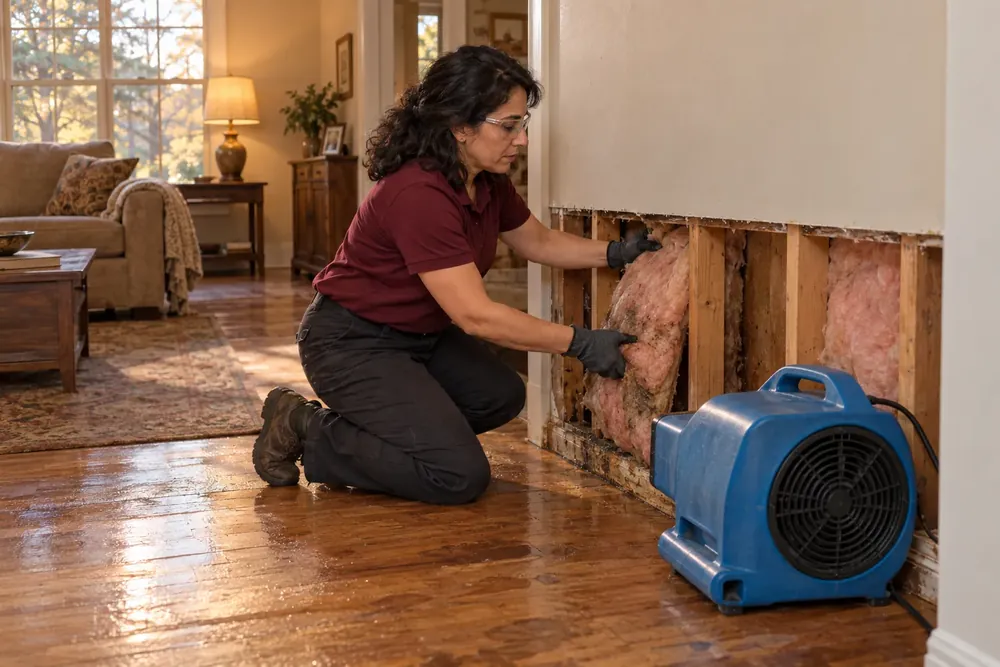
- Moisture assessment. Dampness can remain inside a wall after its painted surface feels dry. Your technician checks accessible materials and maps the affected areas to plan drying.
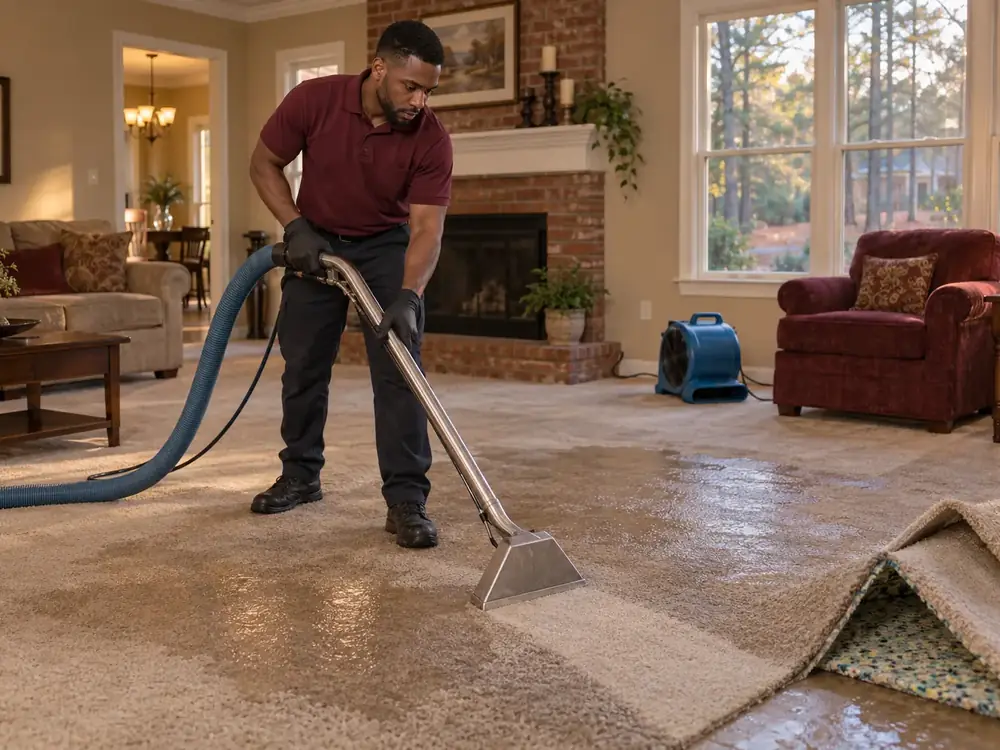
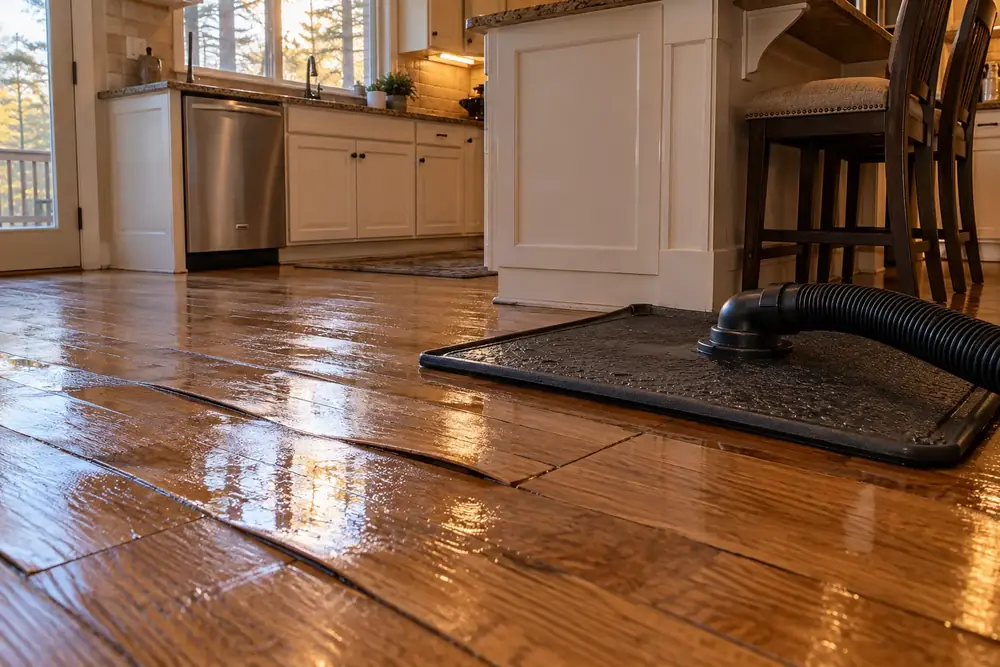
- Water extraction. Standing water and recoverable moisture in flooring are removed before the drying setup is chosen. Extraction and evaporation address different parts of the same moisture problem.
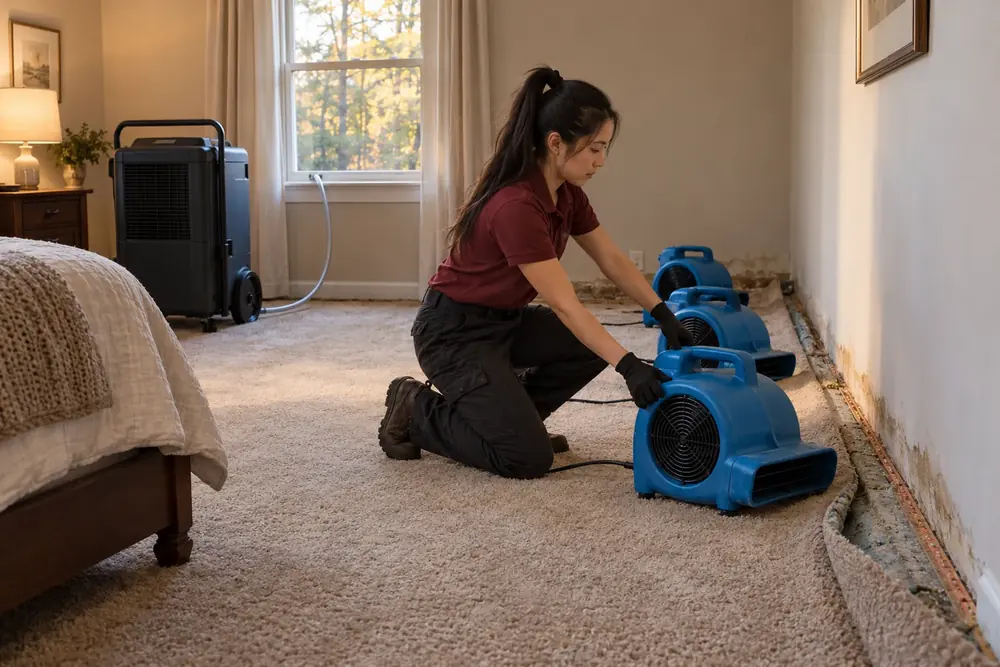
- Targeted airflow. Air movers direct air across wet surfaces or accessible cavities. Placement follows the materials, room layout and contamination assessment.
- Dehumidification. A water damage dehumidifier removes moisture from indoor air while wet materials release it. Equipment needs depend on the space and the drying load.
- Material decisions and progress checks. Repeat readings show whether materials are drying. After water damage, drywall repair follows an assessment of swelling, seam condition and moisture; your technician identifies what needs removal and what can remain.
Signs Moisture Remains After a Leak
- Floor edges remain damp. Moisture beneath flooring can persist after the visible water is gone.
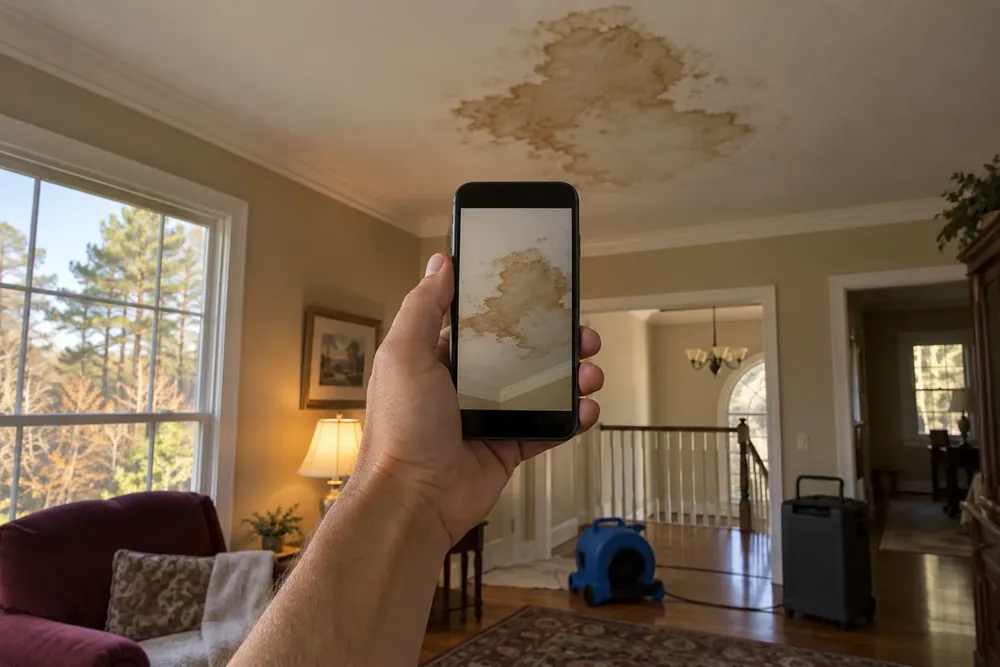
- Wall seams swell. Bubbling paint or raised drywall seams can point to wet materials behind the finish.
- Carpet padding stays wet. A drier carpet surface does not establish that the padding or subfloor has dried.
- Windows collect condensation. Moisture indoors can condense on cooler glass, particularly when wet materials are releasing water.
- A room keeps smelling damp. Lingering odor calls for an assessment of the moisture source and affected surfaces.
How Structural Drying Progress Is Measured
- Call to discuss the wet materials in your Roswell home. Describe the leak and any extraction already completed while your technician plans the assessment.
- Moisture checks establish the affected area and material condition. Your technician identifies active water sources, remaining standing water and access needed for drying.
- Extraction, necessary material removal and a suitable drying setup follow. Airflow and dehumidification are adjusted to the rooms and the surfaces that need attention.
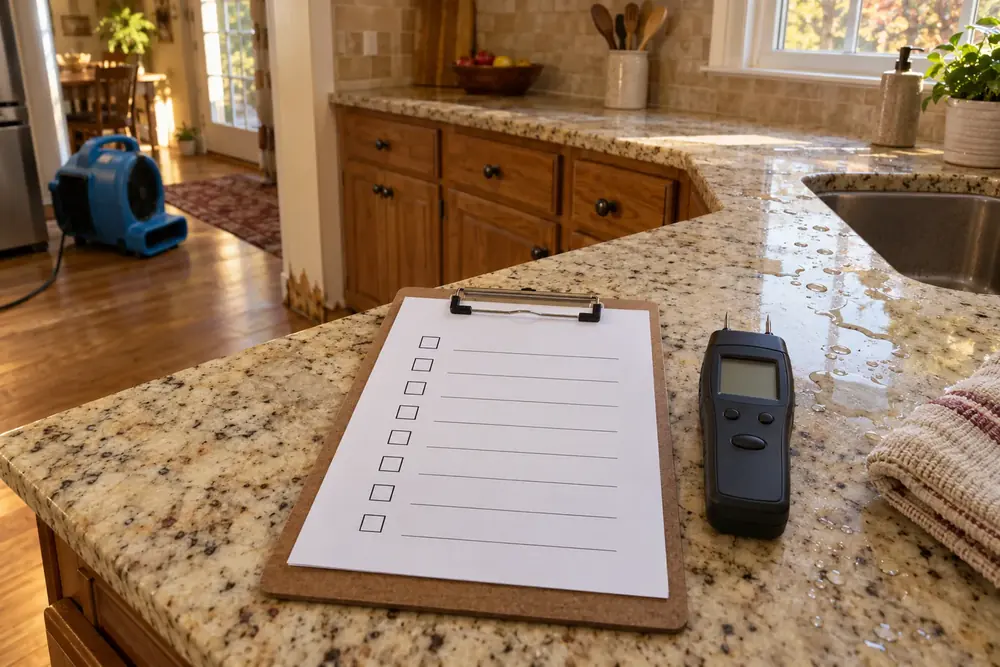
- Repeated readings track drying toward material-specific targets. Equipment is adjusted as conditions change, and the closing scope explains remaining repairs before finishes are replaced.
Factors Behind a Structural Drying Estimate
Water trapped under flooring or behind a wall changes the drying plan because equipment needs access to the wet materials. Room size, saturation, material thickness, removal needs and equipment runtime affect the scope. Repeat visits for moisture checks are another part of the estimate.
One of our local water damage partners will review the drying plan with you and explain its price before equipment is set up. Ask which extraction, drying and monitoring tasks are included, with replacement work identified separately.
Water damage drywall repair cost includes repair decisions beyond drying alone. Read the restoration cost guide for scope factors, or call to discuss persistent dampness now.
Why Call About Moisture That Stays Hidden
- A call when dampness appears. Calls are answered 24/7, including when a stopped leak leaves wet floors after hours.
- Local water damage professionals. Roswell drying work starts with attention to the rooms, materials and moisture source involved.
- Clear equipment and scope decisions. The proposed drying setup and price are explained before work, with repair needs distinguished from moisture removal.
- Measured documentation. Photos, recorded moisture readings and a written scope provide documentation for insurance and explain drying progress.
Protect Wet Rooms While Drying Is Arranged
Wet floors and electrical equipment require a safe work area before drying begins. Call from a dry location and share any concerns about outlets, sagging ceilings or contaminated water.
- Avoid wet electrical devices. CDC guidance for flooded homes says to shut off power only from a dry location and have an electrician assess flooded electrical systems before power is restored.
- Keep away from sagging ceilings and unstable flooring. Do not cut into a bulging ceiling or open a wall to look for moisture.
- Leave installed air movers and dehumidifiers in their assigned positions. Tell your technician about unusual noises, leaks or tripped breakers rather than moving equipment yourself.
- Keep contaminated spaces closed off. Airflow is planned after the water source and contamination are assessed, rather than starting household fans indiscriminately.
Related Water Damage Services
Areas We Serve Around Roswell
Structural drying and dehumidification cover homes in Roswell, Milton and Johns Creek. Describe the damp materials during your call, including moisture left after extraction.
Structural Drying & Dehumidification FAQs
- What does structural drying remove?
Structural drying removes moisture retained in building materials after extraction, using controlled airflow and dehumidification. A dry floor surface can hide dampness below it, so your technician checks materials instead of relying on touch alone. The setup addresses accessible wet areas, with repeat readings used to assess progress and guide equipment changes.
- Can a household dehumidifier dry a whole wet room?
A household dehumidifier may reduce room humidity, but it does not establish that wet walls, padding or subfloors have dried. Equipment capacity, airflow and access to trapped moisture all affect the result. Call about the affected materials; your technician assesses the drying load and explains whether the existing setup addresses the moisture involved.
- How long does structural drying take?
Drying time depends on saturation, the materials involved and access to the wet areas. Your technician uses repeat moisture readings to judge progress rather than promising a fixed number of days. Thick materials or enclosed spaces may need a different approach. The drying time guide explains why surface appearance alone cannot set the schedule.
- Does water damage drywall repair near me require full replacement?
Full replacement isn't always necessary after clean-water damage when drywall has no swelling and its seams remain intact. The wall cavity still needs attention, and contaminated water changes the removal decision. For water damage repair, drywall condition matters before patching or paint. Your technician assesses those conditions and explains any drywall repair needed after drying.
- Does water damage mitigation near me include structural drying?
Structural drying is part of mitigation when moisture remains in recoverable building materials. Extraction removes accumulated water; drying addresses moisture left behind and dehumidification helps manage the air receiving that moisture. Call about the rooms affected, even if the puddles are gone. The written scope identifies the drying tasks and any separate replacement work.