
Roswell · Alpharetta · Sandy Springs · Johns Creek
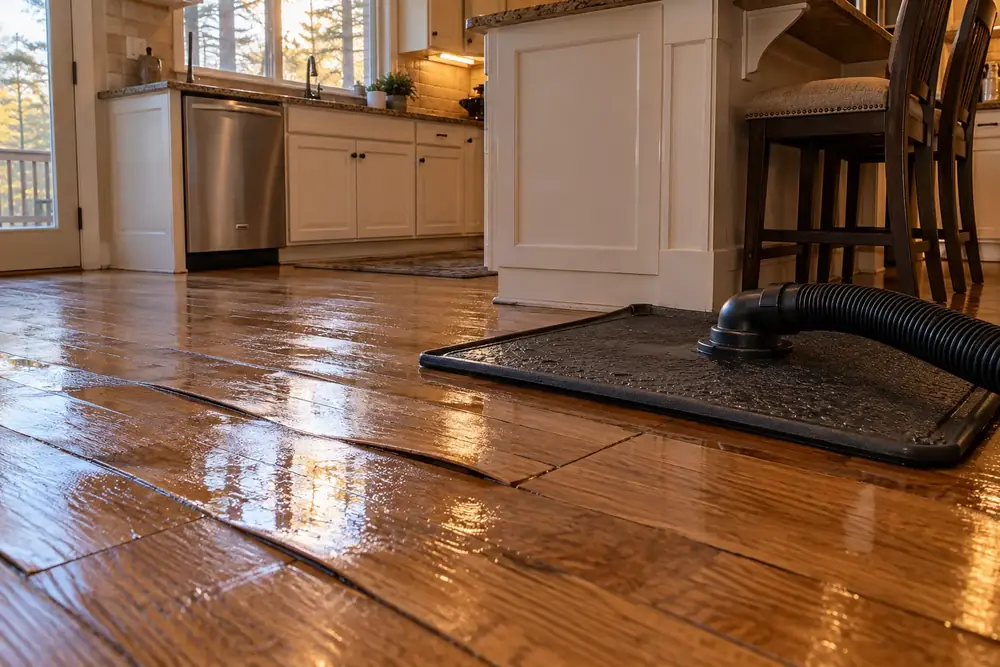
Water Damage: Hardwood Floor, Roswell, GA
Leaks leave hardwood swollen and carpet damp even after the puddle disappears. Our local water damage professionals assess affected floors in Roswell, GA, remove trapped water and track drying; call now and describe the changes underfoot.
- Calls answered 24/7
- Hardwood & Floor Water Damage
- Roswell and nearby
Floor Cleanup Includes the Layers Beneath the Surface
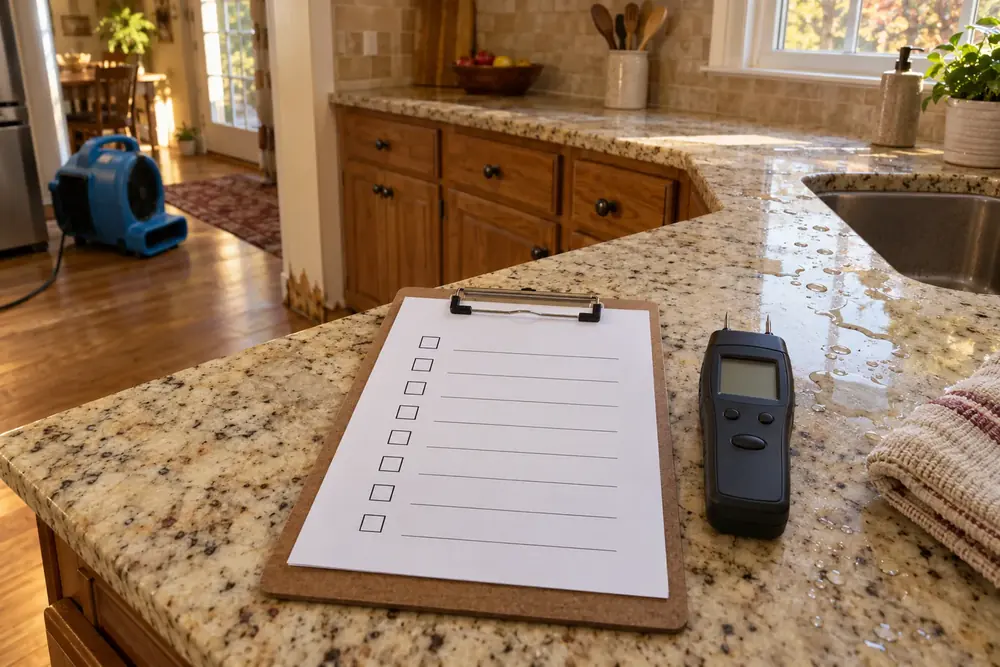
- Moisture checks. After water damage, wood floor surfaces and the layers beneath them need separate checks. Your technician maps affected areas and explains which flooring needs drying or removal.
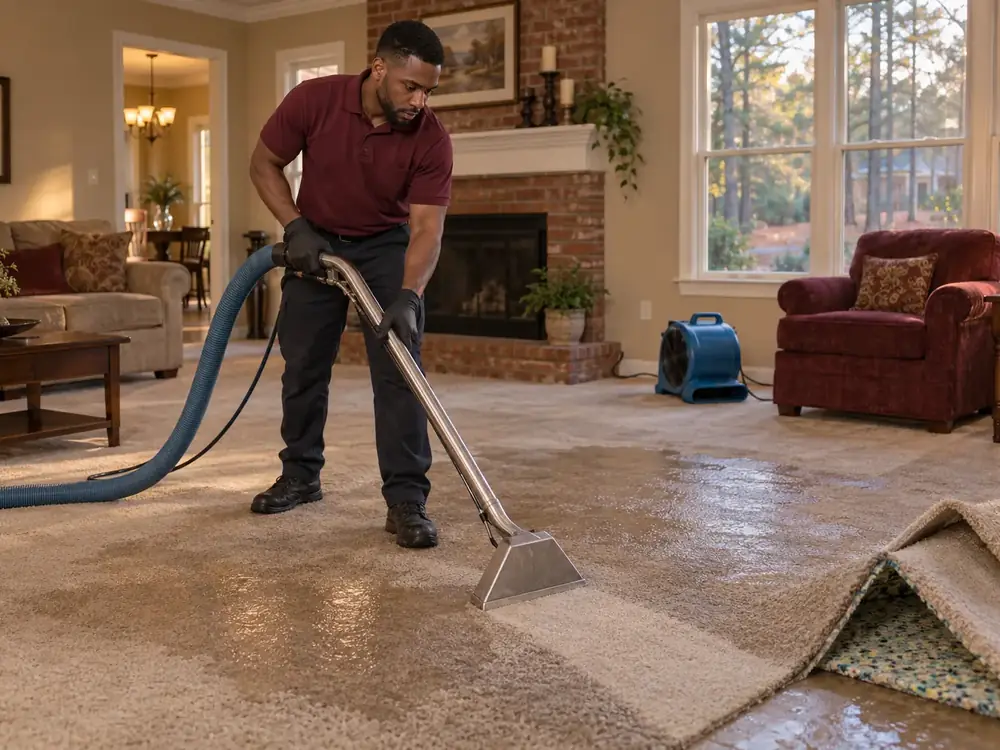
- Carpet extraction. Water removal from carpet targets moisture held in the fibers and backing. Water extraction from carpet is followed by an assessment of the padding and subfloor.
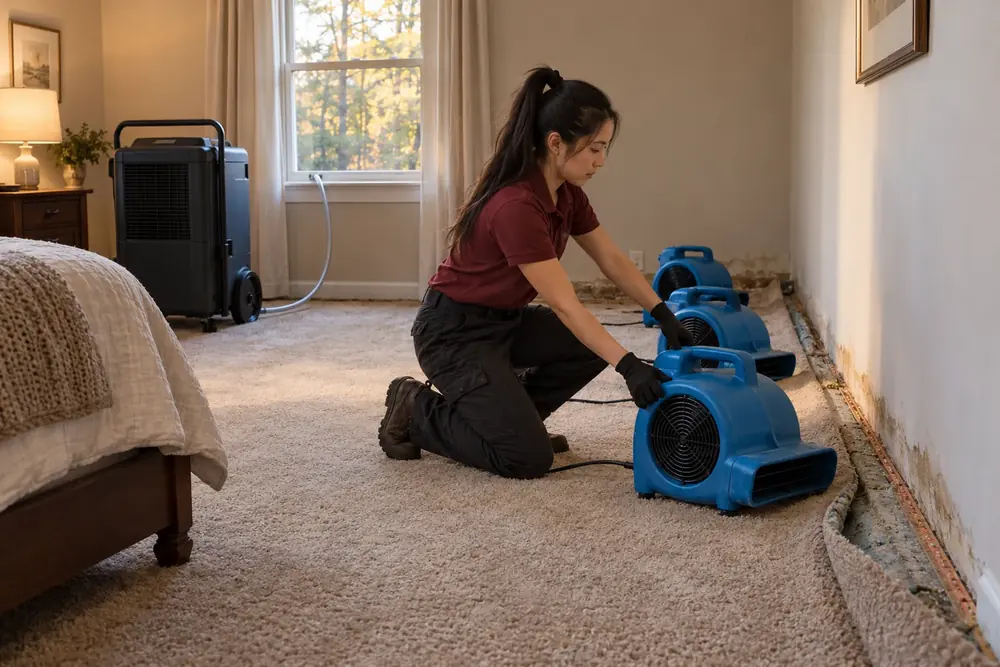
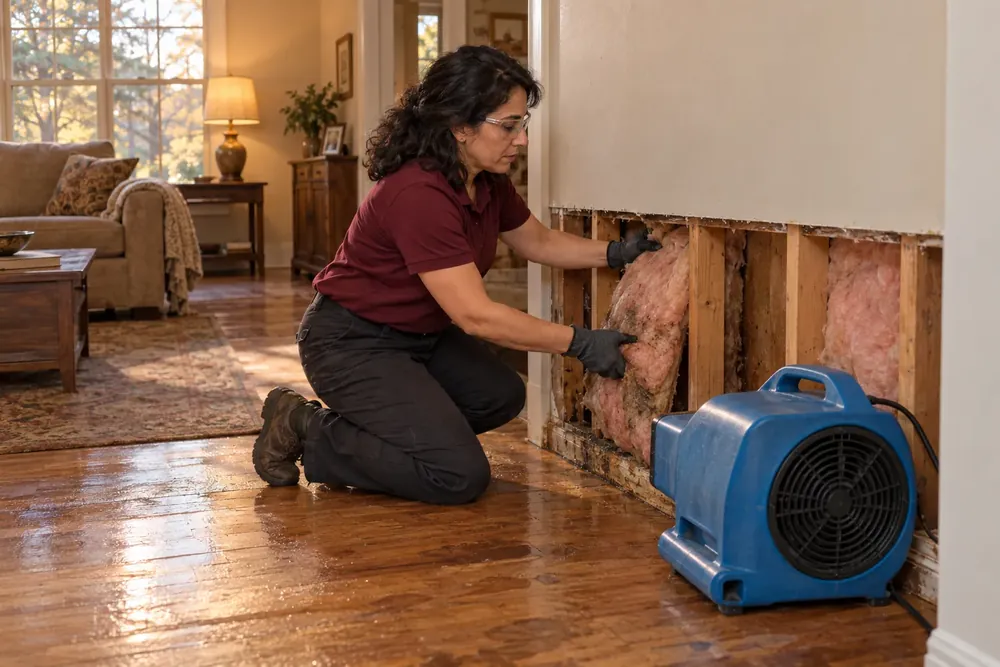
- Controlled drying. After water damage, hardwood floor drying addresses retained moisture with equipment suited to the materials. Your technician explains the placement and records changes in moisture readings.
- Material decisions. Flooring that cannot be cleaned and dried is identified for replacement. The repair plan separates salvageable materials from sections that need removal.
- Repair preparation. Final moisture checks help establish when the floor is ready for the next stage. The written scope identifies replacement, finishing and remaining work.
Raised Boards and Damp Carpet Signal Hidden Moisture
- Raised board edges. Wood gains moisture and swells, leaving edges higher than the middle of a plank.
- Persistent wet patches. Carpet that stays damp after blotting needs attention beneath the fibers.
- Changes around a leak. Water damage on wood may become noticeable beside an appliance or at a doorway.
- Wet flooring underneath. A dry top layer does not establish that the subfloor has dried.
Call about new floor changes while your technician assesses the cause and extent.
From the First Call to Floor Repair Readiness
- Describe the floor. Call about the leak, standing water or raised boards. Share the room and flooring type during the conversation.
- Review the findings. Your technician checks the affected layers, discusses the water source and explains the proposed drying and repair work.
- Extract and dry. Work begins with agreed cleanup measures, followed by equipment suited to the materials. Moisture readings track progress beneath the visible surface.
- Plan the finish. Once drying targets are met, your technician documents the results and explains any remaining replacement or refinishing work.
Flooring Type and Hidden Moisture Affect the Cost
A wet floor can involve carpet padding, boards and subflooring, so water damage floor repair depends on more than the visible patch. The affected area, water contamination, access beneath the flooring, equipment use and replacement materials all shape the scope.
One of our local water damage partners will explain the proposed floor work and its price before work begins. Ask how extraction, drying and finishing are separated in the estimate. The restoration cost guide explains the factors behind a written scope without assigning a price to an unseen floor.
Why Homeowners Call About Wet Floors
- Calls answered 24/7. A newly wet floor is reason to call, whether the leak appears overnight or during the afternoon.
- Local assessment. A water damage professional serving Roswell evaluates the flooring and explains the next steps for the affected rooms.
- Clear scope. The proposed work and price are discussed before cleanup begins, including drying and any separate floor repairs.
- Recorded damage. Photos, moisture readings and a written scope provide documentation for insurance and a record of the affected materials.
Keep Clear of Wet Floors and Electrical Hazards
Wet floors can conceal contaminated water and electrical hazards; call from a dry, safe area.
- Keep children away from floodwater and avoid walking through it. The CDC floodwater safety guidance explains the risks from waste, sharp debris and electricity.
- Do not start fans when the water may be contaminated. The EPA clean-water damage guidance cautions against fans until the source is understood and against excessive heat on hardwood.
- Avoid plugging drying appliances into wet outlets or handling electrical equipment while standing in water. Describe those hazards during your call and leave the affected area clear.
Related Water Damage Services
Areas We Serve Around Roswell
Floor drying and cleanup serve Roswell and Alpharetta. Call about affected boards, carpet or subflooring and describe the rooms involved.
Hardwood & Floor Water Damage FAQs
- Can a leak damage wood flooring?
Yes, excess moisture can make wood swell and change the shape of floorboards. Raised edges are one sign, but appearance alone does not show how much moisture remains. Call about the leak or floor change so your technician can assess the boards and the materials beneath them.
- Can wet hardwood flooring be saved?
Some wet hardwood can be dried and retained, while damaged sections may need replacement. The decision depends on the material's condition, the water source and whether affected layers can be cleaned and dried. Your technician explains the findings and the repair options without promising that every board will recover.
- Is carpet extraction enough after a leak?
Extraction is only part of drying a wet carpeted floor. Alongside water removal, carpet padding and the subfloor need assessment because moisture may remain below the backing. Your technician explains which layers can stay, which need removal and how the drying plan addresses the affected room.
- How long does a wet floor take to dry?
Drying time depends on the floor assembly, the amount of retained moisture and the drying conditions. A board surface that feels dry does not establish that the underlying materials are ready for repairs. Progress readings give your technician a basis for adjusting the equipment and explaining the next stage.
- Can I refinish the floor as soon as the water is gone?
Refinishing should wait until moisture checks establish that the affected materials are dry enough for that work. Removing visible water does not complete the drying process. Call about the floor's condition, and your technician will explain the drying targets and which repairs belong in the finishing stage.