
Roswell · Alpharetta · Sandy Springs · Johns Creek
Flooded Basement Cleanup Roswell, GA
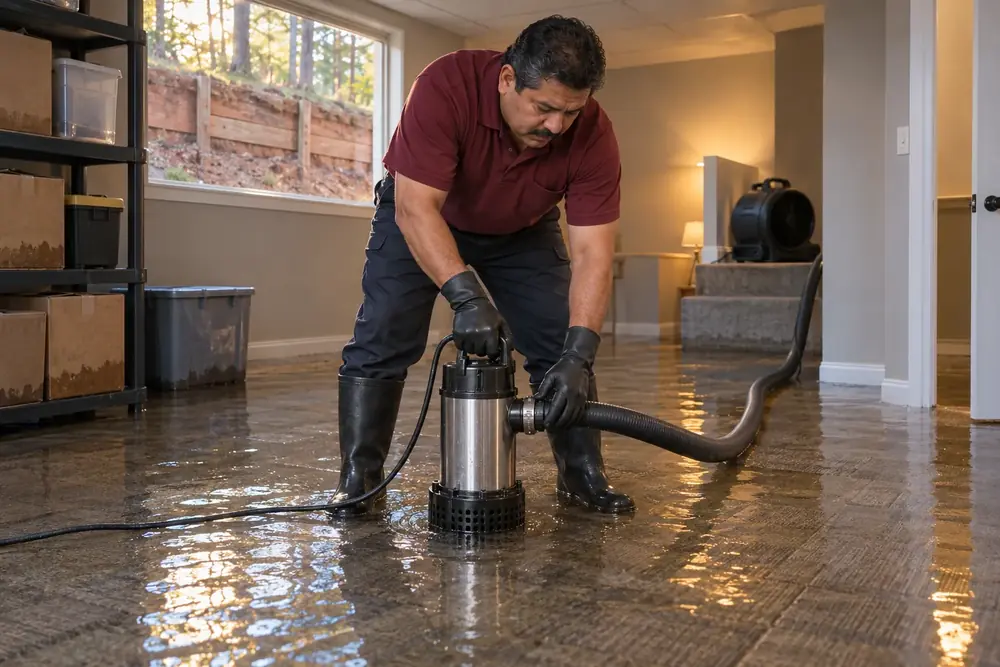
Water collecting below a home can soak flooring, stored belongings and the lower parts of walls. Our local water damage professionals provide flooded basement and crawl space cleanup in Roswell, GA, removing standing water and drying affected materials; call about the water you notice.
- Calls answered 24/7
- Flooded Basement & Crawl Space Cleanup
- Roswell and nearby
Basement and Crawl Space Cleanup Services
Water below a home needs removal, material assessment and drying; cleanup addresses the affected basement or crawl space rather than stopping at an empty floor.
- Entry and source assessment: Your technician considers electrical hazards, water depth and the likely entry point. Those findings guide safe access and the removal plan.
- Pumping and extraction: Standing water is removed with equipment suited to the depth, access and site conditions. Wet floor coverings receive separate assessment.
- Damaged material removal: Soaked belongings, insulation and wall materials are evaluated for retention or disposal. The agreed scope identifies what needs to come out.
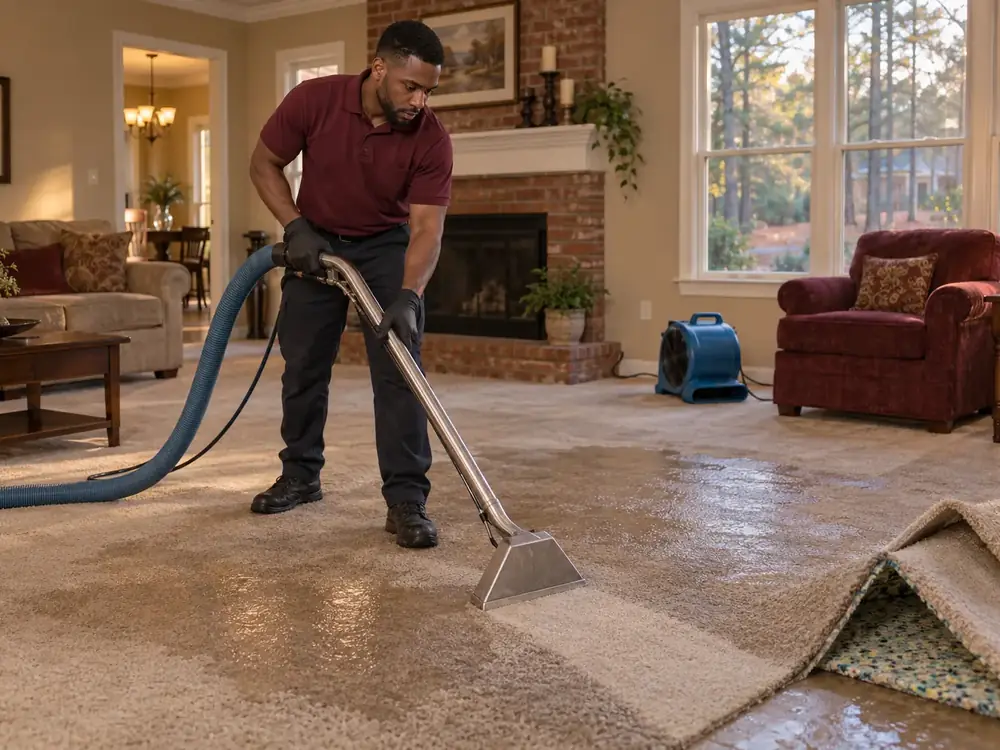
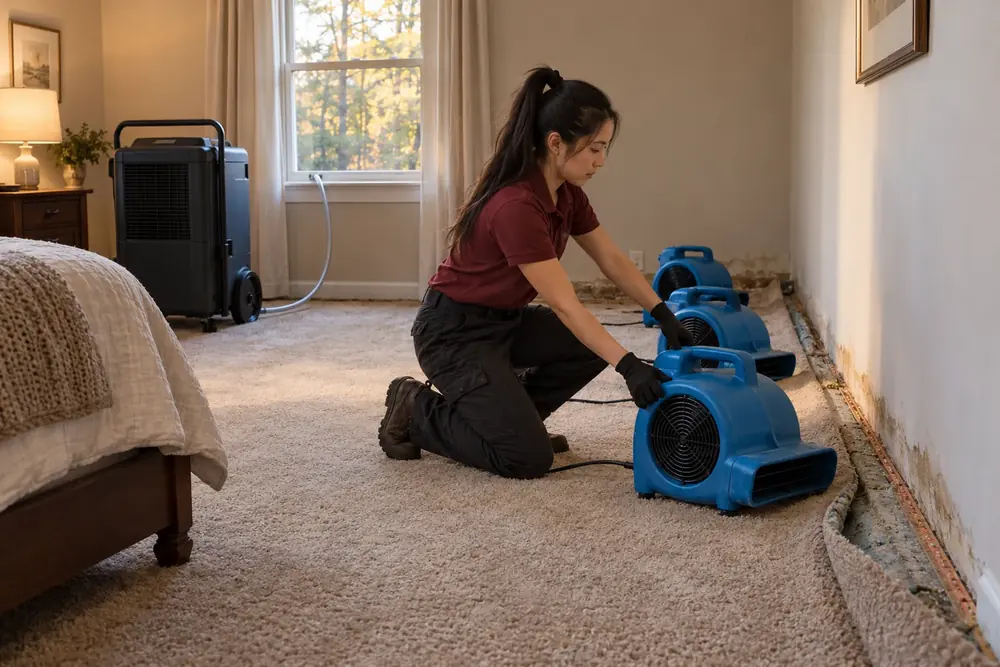
- Drying below the surface: After water removal, basement walls and flooring can still hold moisture. Air movement and dehumidification address materials that remain damp.
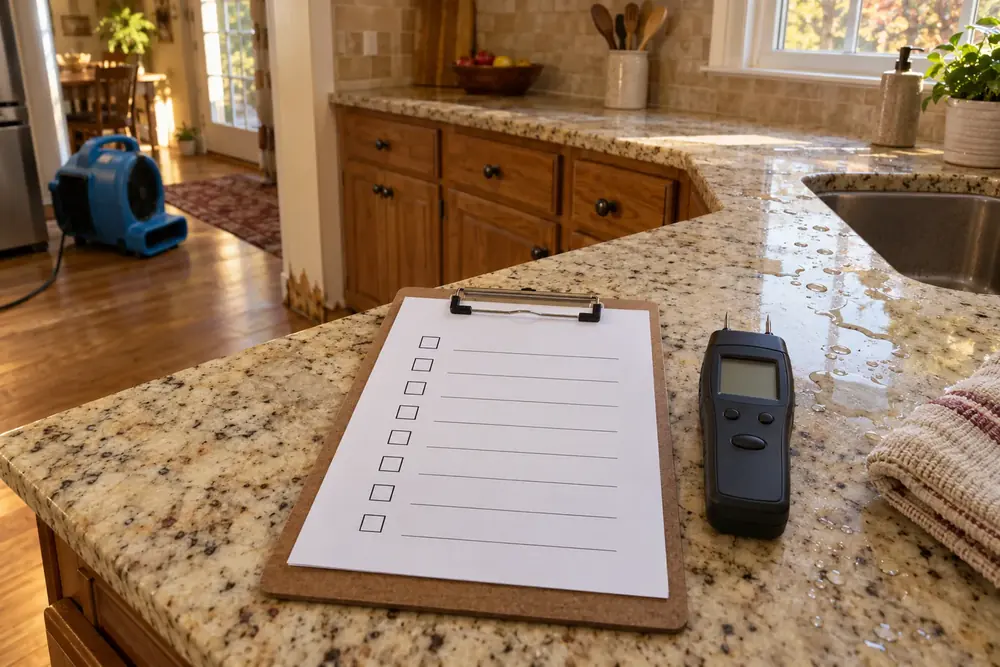
- Moisture review: Readings track drying in accessible framing and finishes. Remaining repairs and source-control work are identified for the next stage.
Lower-Level Water Patterns to Notice
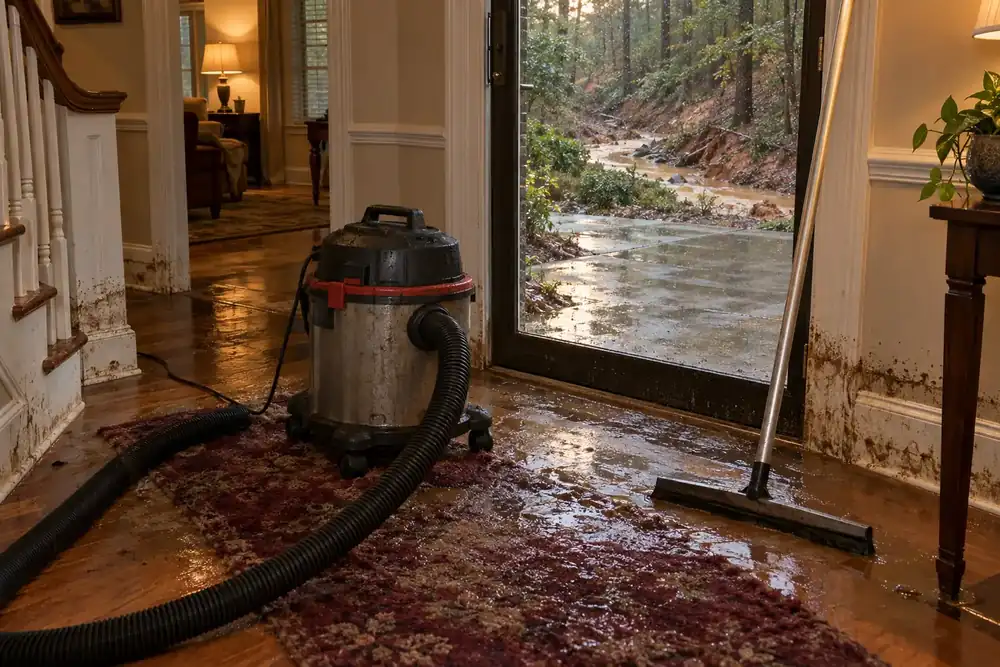
Runoff from Roswell roofs and driveways can contribute to yard flooding, making water entry around a lower level worth reporting. Call about a puddle, damp edge or recurring wet patch.
- Water collecting near a basement entrance or along the floor's perimeter.
- Carpet that feels saturated rather than simply cool underfoot.
- Damp marks rising from the bottom of finished walls.
- Water or wet insulation visible at a crawl space opening.
- A musty odor downstairs after a leak, even when no standing water remains.
How Lower-Level Cleanup Moves Forward
Below-floor moisture needs assessment as well as extraction; cleanup progresses from your call to measured drying.
- Start the conversation: Call about the basement or crawl space and share what is visible without entering water. Discuss active flooding and access during the call.
- Set the cleanup scope: Your technician assesses hazards, affected materials and the water source, then reviews the work and pricing with you.
- Remove water and wet materials: Pumping, extraction and necessary material removal follow the assessed conditions, with attention to contamination and safe access.
- Dry and review: Equipment reduces remaining moisture while readings track progress. A review of the dried area identifies repair needs and unresolved water-entry issues.
Factors Behind Basement Cleanup Costs
Basement flood cleanup cost varies with water depth, contamination, access and the amount of material that needs drying or removal. A narrow crawl space or multiple wet rooms changes the work involved. For water damage, basement repair cost also reflects damaged finishes and whether flooring or insulation needs replacement.
One of our local water damage partners reviews the lower-level cleanup scope with you and sets out the price before starting. Pumping, drying and rebuilding should be identified separately so you understand the proposed work. The water damage cost guide explains additional factors; call to discuss your basement or crawl space.
Reasons to Call About Water Downstairs
An empty basement floor can still leave damp walls and underfloor materials; professional assessment helps identify the work beyond pumping.
- A call at any hour: Calls are answered 24/7 when lower-level flooding interrupts your day or night.
- Local cleanup knowledge: A local water damage professional assesses the basement or crawl space and explains the findings.
- A defined scope: Removal, drying and proposed repairs are described with pricing before work gets underway.
- Documentation of the damage: Written records, photos and moisture readings support insurance documentation without requiring you to enter unsafe water.
Records for Basement Water Damage
Basement flooding can affect stored belongings as well as the room itself, so insurance documentation should describe both. Your technician records accessible wet surfaces, moisture measurements and the planned cleanup in a written scope.
Photographs of water marks, flooring and damaged items help establish their condition. Take pictures only from a safe location; don't enter a flooded lower level to collect them. Keep the written findings and subsequent drying records together. You can call while water remains downstairs and discuss documentation as part of the cleanup assessment.
Keep Out of Flooded Lower Levels
Standing water downstairs can hide electrical and structural hazards, so stay out and call from a dry location.
- Keep power hazards separate: Don't wade toward a breaker or operate a pump while standing in water. CDC advice on electrical hazards calls for an electrician when safe access to the power switch isn't possible.
- Avoid rushed pumping: Deep water requires assessment before removal. EPA standing-water guidance warns that draining water several feet deep too quickly can cause walls or floors to crack or collapse.
- Limit exposure: Keep children and pets away. EPA reentry guidance identifies contamination and structural warning signs, including leaning basement walls. Don't enter a visibly damaged space to retrieve belongings.
Related Water Damage Services
Areas We Serve Around Roswell
Call for basement or crawl space water cleanup in Roswell, Milton, Woodstock or Alpharetta. Describe the affected lower level during the conversation.
Flooded Basement & Crawl Space Cleanup FAQs
- Does basement flood clean up near me include crawl spaces?
Yes, cleanup covers water accumulation in crawl spaces as well as flooded basements. Access, exposed framing, wet insulation and soil conditions shape the work below the house. Call and describe which space is affected from a safe position; the assessment identifies removal and drying needs for that area.
- Is basement water removal near me enough to dry the room?
No, removing puddles doesn't establish that walls, flooring and framing are dry. Carpet backing and underfloor materials can retain moisture after extraction. Your technician uses readings to assess the remaining dampness and plan drying. Call about saturated carpet or damp wall edges even if the visible water has receded.
- Who handles water removal from basement near me after heavy rain?
A local water damage professional assesses rainwater entry and carries out the agreed extraction and drying work. Outdoor runoff and indoor damage need separate attention when the source keeps feeding water downstairs. Call about active flooding now; the assessment identifies cleanup needs and any additional work needed to control entry.
- Which water removal pump for basement flooding works best?
The appropriate pump depends on water depth, debris, discharge conditions and safe access to power. Equipment choice is only part of the assessment because deep flooding can create pressure-related structural risks. Don't enter the water to set up a pump; call and explain what is visible from a dry location.
- Can a basement be repaired after flooding?
A basement can be repaired when an assessment establishes safe conditions and identifies which materials can be retained or replaced. The process addresses the water source, removes damaged material and dries remaining surfaces before rebuilding. Call about the affected space; moisture readings and the condition of finishes guide the repair plan.