
Key points
Water damage has no fixed drying time; materials, moisture depth and indoor conditions determine the duration. Drying starts with water removal and continues until material readings meet the job's drying goals. A surface that feels dry can still conceal wet flooring layers or wall cavities, so touch alone cannot confirm completion.
North Georgia summers bring stretches of warm, humid weather, so a Roswell home with wet building materials needs attention to indoor moisture as well as visible water. Evaporation from a wet floor adds moisture to the room. Call about damp surfaces or standing water and discuss the drying assessment while describing the affected spaces.
Water Removal Begins the Drying Process
Standing water must be removed before the remaining moisture in building materials can be addressed effectively. Your technician assesses the source, contamination and affected materials to plan extraction and drying. Repairing the source is part of preventing more water from entering; you can call while the leak is still being addressed.
Removing a puddle doesn't remove all the water absorbed by a wall or floor. Initial moisture readings establish which areas need attention, including adjacent surfaces that may look unaffected. Access to wet layers also influences the work needed before drying equipment is positioned.
Materials and Access Shape Progress
Water trapped under flooring or behind a finished wall has fewer paths to evaporate than water on an exposed surface. Carpet backing, insulation and wood can respond differently to moisture. Material condition and contamination affect whether drying in place is appropriate or removal is needed.
EPA guidance for clean-water damage distinguishes wallboard with intact seams from swollen or damaged wallboard and calls for checking the underflooring beneath hard flooring. Those differences explain why two rooms with similar visible damage can need different drying plans. A wall cavity may require access even after the paint feels dry.
Humidity Control Supports Evaporation
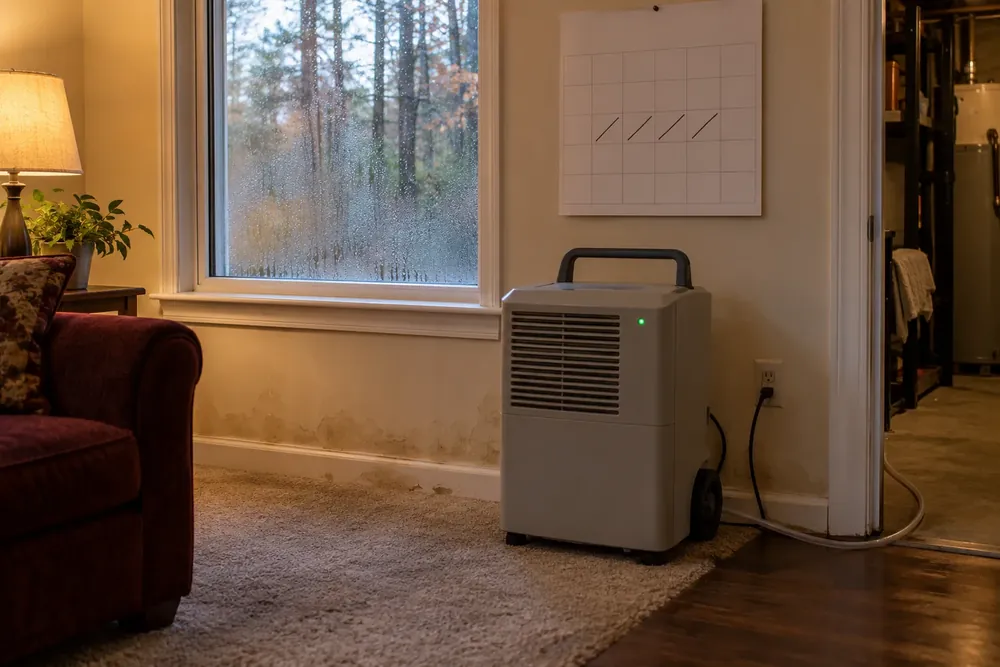
Humid outdoor air can work against drying when windows are opened during a Georgia summer. Your technician measures indoor conditions and chooses how to manage airflow and dehumidification. Air movement helps moisture leave exposed materials, while a dehumidifier removes moisture from the air.
Equipment needs can change as the wet area shrinks or previously hidden moisture is found. One of our local water damage partners discusses the drying plan and associated charges with you before work begins. Ask how equipment use and progress checks will be documented, including any changes recommended as readings develop.
Repeated Readings Judge Completion
Materials can remain wet beneath a surface that feels dry, so drying is judged through measurements rather than a hand on the wall. Your technician compares affected material readings with appropriate drying goals and an unaffected reference where suitable. Indoor humidity is useful information, but a drier room doesn't prove the subfloor is ready for repair.
Moisture meters help assess building materials, including locations behind finishes. Records should show where measurements were taken and how the results changed. If progress slows, the assessment may need to revisit concealed water, access or an ongoing moisture source. A calendar date alone doesn't establish completion.
Drying and Repair Have Separate Timelines
Wet materials must reach suitable conditions before replacement finishes or other repairs can proceed. Homeowners asking "how long does water damage restoration take" need a timeline that includes inspection, cleanup, drying and rebuilding. Equipment removal marks a drying decision, not necessarily the end of the project.
The answer to "how long does water damage repair take" also depends on the repairs involved. Replacing damaged wall sections and restoring a floor finish involve different work after drying. Discuss the sequence during your call rather than treating the drying period as a promise for the whole job.
Prompt Attention Limits Moisture Exposure
Wet materials left in place can support mold growth, so waiting for visible growth delays action on the moisture. If you're wondering "how long does it take for mold to grow," EPA advises drying wet materials within 24 to 48 hours to help prevent growth. That prevention guidance is a reason to act promptly, not a guaranteed completion time for structural drying.
During the work, ask your technician to explain:
- Which materials are still above the drying goal.
- Whether concealed layers need further access.
- How equipment is controlling airflow and humidity.
- What readings support the decision to begin repairs.
For the distinction between drying and rebuilding, see Water Mitigation vs Water Damage Restoration. Call now about the wet area; observations about the flooring, walls and leak timing can be shared during the conversation.