
Key points
Call now from a safe location about the leak and wet rooms; optionally close the home's main water shutoff only if you can reach it safely. Stay out of water near electrical outlets, wiring or appliances, and keep away from sagging ceilings. Move valuables and photograph visible damage only from a safe, dry location; arrange plumbing repair alongside water extraction and drying.
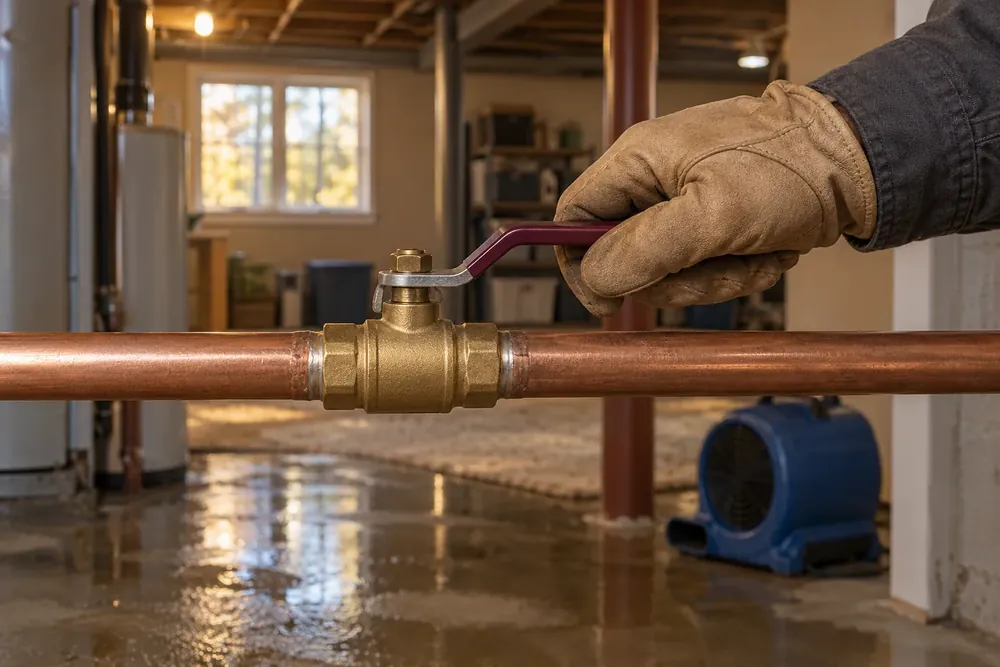
Exposed plumbing in unheated garages, crawl spaces and attics is vulnerable to freezing in north Fulton homes. A split supply line can keep feeding water into walls after the first stain appears. Call now about burst pipe water damage and describe the wet areas during the conversation; locating the break isn't a task you need to finish first.
Close the Main Water Shutoff Safely
An active supply leak needs the home's main water valve closed, provided the valve is safely accessible. Look where the supply line enters the house, such as a basement utility area or garage. A round valve handle generally turns clockwise to close; a quarter-turn lever closes when it sits across the pipe. Don't force a stuck handle or dismantle the meter.
Fulton County advises residents to know the main shutoff location so they can stop water when a pipe bursts. If water or electrical hazards block access, stay clear and explain the situation when calling. Keep the water off until the damaged line has been repaired and checked.
Keep Clear of Electrical and Ceiling Hazards
Water around outlets, appliances or ceiling fixtures makes entering the affected area unsafe. Don't step into pooled water to unplug equipment or reach a breaker panel. Shut off affected power only from a dry location with a dry access route; leave electrical isolation to qualified help if the panel or surrounding area is wet.
A bowed ceiling or sagging seam also needs distance, because soaked material can fall. Keep children and pets out of the affected rooms. A towel or bucket doesn't make a damaged ceiling safe to stand beneath.
Protect Belongings and Record Visible Damage
Dry access lets you move small valuables and take photographs without entering the wet area. Use a short checklist while help is being arranged:
- Move documents, electronics and loose rugs away from the water when safe.
- Photograph the visible leak, stains and affected rooms from a dry position.
- Record when the water was noticed and when the supply was shut off.
- Save repair invoices, moisture readings and the written cleanup scope together.
When discussing broken water pipe repair cost, keep the plumbing invoice separate from extraction, drying and finish repairs. Homeowners asking "are burst pipes covered by insurance" can use photographs and written scopes to document the damage for their insurer. Documentation records the loss; it doesn't establish coverage or approval.
Recognize a Pipe Break Behind a Wall
A spreading stain, hissing inside a wall or a water meter moving while fixtures are off can indicate a concealed supply leak. Watch for damp baseboards, softened drywall or water reaching the room below. Those signs warrant investigation, but they don't pinpoint the damaged pipe by themselves.
Describe any signs you've already noticed during the call. Don't open drywall or approach a meter through unsafe conditions just to gather evidence. Broken pipe water damage can extend beyond the visible stain, so your technician checks nearby materials for moisture.
Arrange Plumbing Repair and Water Cleanup
A plumber repairs the leaking line, while a water damage professional addresses water left in building materials. Busted water pipe repair cost depends partly on access: an exposed pipe and a line behind tile require different work. Access openings, replacement sections and testing also affect burst water pipe repair cost.
One of our local water damage partners explains the cleanup scope and its price before work begins. The written scope should distinguish water extraction, drying and any proposed finish repairs. Plumbing repair stops the supply; structural drying addresses moisture that remains afterward.
Avoid Actions That Hide or Spread Damage
Wet materials need assessment before repainting, patching or covering them with new flooring. Don't use a household vacuum to collect water or run electrical appliances in a wet room. Never use an open flame to thaw frozen plumbing.
Leave drying equipment adjustments to your technician once the drying plan is underway. Call about the affected rooms now, even when the pipe itself hasn't been located.